
August 27, 2026 • 6 min read
From contractor to co‑developer: Rethinking delivery in integrated gas
The LNG industry hasn’t become more technically complex. It’s become more interconnected.
For decades, Liquefied Natural Gas (LNG) projects have been managed through a largely compartmentalized ecosystem of owners, Engineering, Procurement and Construction contractors (EPCs), Original Equipment Manufacturers (OEMs) and financiers.
Today, the challenge is different.
Projects are becoming more connected across the value chain; extending from upstream resources through liquefaction, export infrastructure, power systems and even data centers.
Many owners are operating with leaner internal teams, while navigating increasingly connected regulatory, social, capital, workforce and supply chain uncertainty.
The projects that succeed will be those that bring these moving parts together earlier, make better decisions sooner and integrate the right ecosystem of partners from concept through completion.
But the goal isn’t integration for integration’s sake. It’s to protect capital, improve optionality and create greater value across the full asset lifecycle.
The rise of the co‑developer
Traditional lump sum turnkey models are becoming less popular due to past failures and increased risk margins. Developers and financiers are more often considering alternative frameworks and contracting models where risk is better understood, more deliberately allocated and managed across the project lifecycle.
This shift is becoming more important as asset classes converge and projects extend further across upstream, midstream and downstream systems, including power and data center infrastructure. The more connected the value chain becomes, the harder it is to manage delivery through isolated scopes or late-stage handovers.
At the same time, leaner development models mean many owners and operators no longer have the same breadth of development and execution capabilities internally. Instead, they’re seeking strategic partnerships that adopt more of a co‑development mindset, combining technical, commercial, social and environmental expertise across all phases of delivery.
Co-developers engage during business case development, helping shape strategies, reduce rework and accelerate decision-making before decisions are final.
Some of the biggest opportunities for improved outcomes come before engineering begins. Rather than entering during FEED or execution, co‑developers engage during business case development, helping shape strategies, reduce rework, accelerate decision-making and appropriately direct capital before decisions are final.
On one current project, integrating port strategy and power requirements early enabled a phased approach and no‑regret infrastructure investment. Given the strength of the existing partnership and complexity of the work, the project went ahead with our team in place as sole-source execution.
“Looking at that whole infrastructure and supply chain, instead of coming up with a single pipeline, you could come up with a pipeline corridor. Instead of coming up with a port that only does LNG, you can come up with an integrated materials type port concept,” says Peter Cox, Vice President, Upstream Onshore, Midstream and LNG. “That's another example of considering the whole value chain. You can get synergies between the various aspects rather than just looking at one particular aspect of it.”
Why value chain integration is becoming a competitive advantage
Integrated gas is no longer just integrated gas. As teams move from compartmentalized to integrated value chains, upstream, midstream and downstream businesses need to collaborate in order to optimize revenue generation and improve project outcomes.
LNG projects in particular are moving further downstream, integrating with power producers and data centers. This introduces new complications and opportunities as differing economic models and requirements meet. No single contractor possesses expertise across all areas, so greater partnership and collaboration is crucial.
“The projects that are successful are those that can deal with the breadth of challenges at the same time, in an integrated manner,” says Craig Henderson, Managing Partner APAC, Worley Consulting.
Projects like these need partners who understand the technical, commercial, regulatory and delivery implications of each decision made across the entire asset lifecycle. Optimizing whole systems, not just single assets. Delivery partners need to evolve from executing a defined scope of work to helping shape the project as a whole. At Worley, this is reflected in our Full Project Delivery approach. Bringing execution‑led thinking to projects from day one to improve capital discipline, reduce late‑stage rework and build greater confidence in outcomes.
Every interface creates both risk and opportunity. When value chains are fragmented, risks often remain hidden until execution, when they’re more costly to address. Integrating earlier helps developers identify trade‑offs sooner, make more informed investment decisions and improve confidence in schedules and costs. In an environment where cost management is crucial, that confidence and certainty of outcome becomes a competitive differentiator.
“We’re focused on becoming a co‑developer with our customers, with Worley as the value chain integrator bringing together the ecosystem of companies required to deliver complex projects.”
Peter Cox, Vice President, Upstream, Onshore, Midstream and LNG
A new era of delivery demands new partnership models
Traditional delivery models were designed around clearly defined asset classes, scopes and contractual boundaries. What we’re seeing now is integrated gas projects increasingly bringing different asset classes, delivery models and commercial structures into the same value chain.
That makes projects harder to package neatly. A power project may have one contracting model. An LNG facility may need another. Marine infrastructure, transmission, upstream development and downstream demand may each introduce different risk profiles. When these elements are connected, the interfaces between them become just as important as the assets themselves.
This is where partnership models need to evolve.
The traditional lump sum turnkey market has shrunk as contractors reduce their appetite for risk. But the risk isn’t disappearing. It’s being priced in, transferred elsewhere or managed through a different delivery structure. Financiers are becoming more open to alternative contracting frameworks, but those models depend on who owns which risk, how decisions are made and how partners stay aligned as the project changes.
For owners, the answer is often getting the right partners involved earlier, with enough trust to work across commercial, technical and delivery boundaries.
“The benefit of Worley is having that full breadth of technical, commercial, social and environmental know-how and AI integration, not just at the front end, but all the way through delivery,” says Henderson.
Stronger partnerships create more resilient delivery models. They support better continuity between phases, give project teams access to broader capabilities and help maintain value when market, capital or execution conditions change.
The next frontier: AI‑enabled integration
As projects become more integrated, so do the decisions that shape them. Choices made in one part of the value chain can impact far beyond their immediate scope, affecting capital efficiency, operational performance, workforce requirements and long-term project economics.
Understanding and optimizing those connections is where technologies like AI, digital simulation and digital twins are starting to create value. Instead of optimizing individual assets, developers can use platforms like NVIDIA Omniverse to model the impact of decisions across the entire project ecosystem before committing capital.
“This is also where AI is starting to play a big role for us and as an industry. And in particular, it’s those second, third order consequences of decision making,” says Henderson. “By bringing commercial and physical realities together in a single digital environment, it’s possible to simulate the entire value chain and make better decisions with greater confidence.”
Decisions can be evaluated not just against engineering outcomes, but also costs, schedules, market conditions, workforce demand and long-term value. That could include modelling how modularization affects CAPEX, OPEX, schedule and labour requirements, or testing delivery models against the availability of skilled resources in a particular region.
The real value of AI isn't automation. It's the clarity it gives developers before capital is committed.
The real value of Omniverse, and AI more broadly, isn’t automation. It’s the clarity it gives developers before capital is committed, helping teams understand the consequences of decisions across the project ecosystem and allocating capital with greater confidence.
The challenge isn’t complexity. It’s connected value.
The future of integrated gas won’t be defined by bigger facilities or more sophisticated technology. Rather by the ability to bring fragmented ecosystems together around a shared value objective.
Because the industry’s biggest challenge is no longer technical complexity; it’s integrating an increasingly connected yet fragmented value chain.
Value chain integration is becoming one of the industry’s most important competitive advantages
As the role of the project partner evolves from contractor to co‑developer, value chain integration is becoming one of the industry’s most important competitive advantages.
Success will come to those that integrate earlier, collaborate more openly and make investment decisions with a clearer view of cost, schedule, risk, flexibility and long‑term value. Because in a world where expertise is distributed and project ecosystems are increasingly fragmented, delivery certainty comes from integration. And value is created by connecting the whole system sooner.
Contributing authors
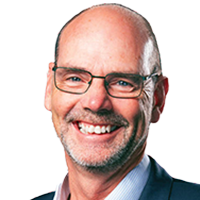
Peter Cox
Vice President, Upstream Onshore, Midstream and LNG
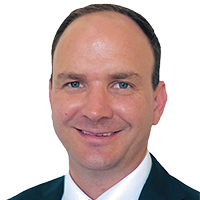
Craig Henderson
Managing Partner APAC, Worley Consulting