
Environment
Statistic Cards
reduction in Scope 1 and Scope 2 GHG emissions since FY2020
sustainability-related aggregated revenue
of our top 20 customers by revenue have net zero commitments
Climate transition plan
As the world prepares to reduce greenhouse gas emissions to net zero, our role is clear. We’re focusing on finding solutions that support our customers in decarbonizing the energy, chemicals and resources sectors in recognition of progress towards the Paris Agreement.
We are also helping to make assets more resilient to the impacts of climate change while supporting the protection of biodiversity, recognizing that these are interconnected. We are accelerating the deployment of technology and transforming the way we design, build and operate assets to help ensure we’re delivering a more sustainable world.
Our climate transition plan contains two focus areas.
- We have strengthened our energy transition expertise across the energy, chemicals and resources sectors.
- We have built capability in technologies such as low-carbon hydrogen, carbon capture and storage, and energy transition materials, enabling us to support customers at different stages of the transition.
- Energy transition capability is now embedded across our business, allowing us to respond to evolving market conditions and support customer investments in the energy transition as they progress.
- Diversification across sectors, regions and technology pathways is a deliberate component of our strategy and underpins our resilience as the pace and nature of the energy transition continues to evolve in the content of balancing security, affordability, and sustainability imperatives.
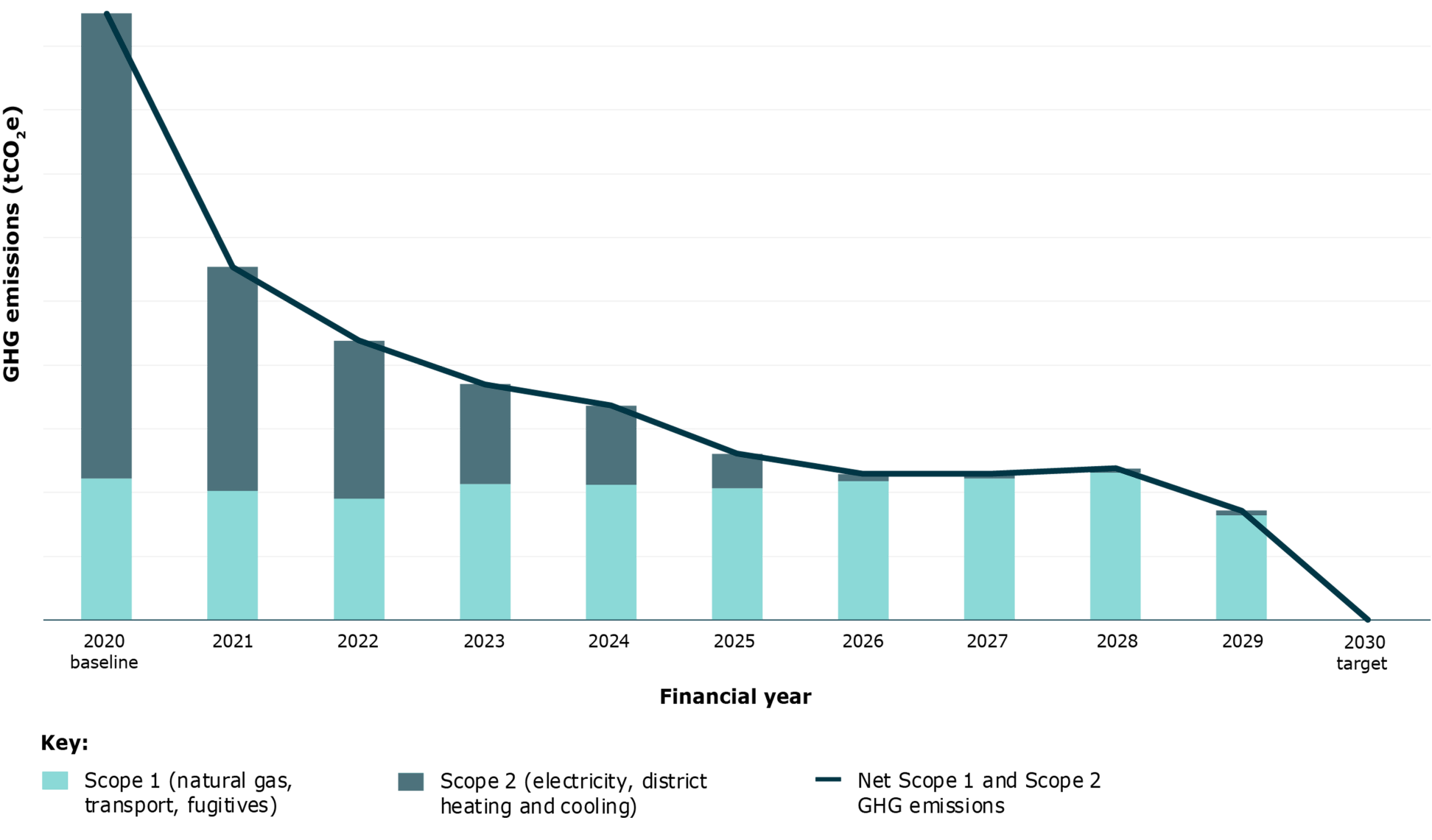
- We are committed to decarbonizing our business and reducing Scope 1 and Scope 2 GHG emissions to net zero by FY2030. We also aspire to reduce our Scope 3 GHG emissions to net zero by FY2050.
- Since our FY2020 baseline year, we have implemented initiatives across our operations to reduce gross Scope 1 GHG emissions, focusing on our facilities and fleets.
- We have acquired and retired Renewable Energy Certificates (RECs) to reduce our Scope 2 emissions, and will continue to do so.
- Where emissions cannot be practically avoided, we plan to use carbon credits to address residual Scope 1 and Scope 2 emissions as we approach FY2030.
Our net zero roadmap for Scope 1 and Scope 2 emissions
Our climate-related risks and opportunities
Our climate-related risks and opportunities process is based on our Risk Management Standard. Our outcomes are incorporated into Group risk reporting and used to inform strategic decision-making, capital allocation, and resilience planning. Refer to our Sustainability Report, which has been prepared in accordance with the Australian Sustainability Reporting Standards (ASRS) issued by the Australian Accounting Standards Board (AASB S2) and the Corporations Act 2001 (Cth).
Managing environmental risks in the field
Our globally consistent Environmental Management System (EMS) is designed to align with ISO 14001 requirements across our locations and operational sites. Certification decisions are based on business need. As of 30 June 2026, we hold ISO 14001 certification at 21 operational sites.
Our EMS includes a series of procedures that support management of environmental risk in the way we deliver work for our customers.
Environment
- Environmental Management Standard
- HSE Risk Management Standard
- Project specific plans
- Air quality, liquid effluent and discharge control standards
- Waste Management Standard
- HSE Decommission and Demolition Standard
Field site establishment and preparation
- Field and site-specific HSE inductions and orientations
- Camp Accommodation Facilities Standard
- Site Traffic Management Standard
- Barricade Hoarding and Barrier Standard
- Occupied facility siting checklist
Dangerous and hazardous substances
- Hazardous Substances and Dangerous Goods Standard
- Chemical Hazard Communication Standard
- Hazardous Chemicals Information Form
- Asbestos Containing Materials Standard
- Working with and Managing Radioactive Materials Standards
Our SEAL framework
Our Safe and Sustainable Engineering for Asset Lifecycle (SEAL) framework is our approach to deliver safe and sustainable engineering outcomes to our customers and broader society.
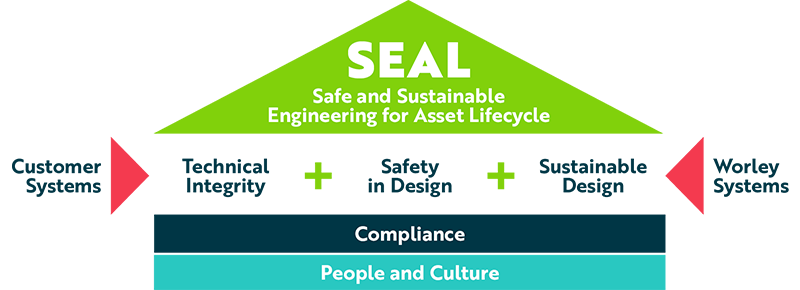
SEAL involves a series of activities that seek to improve sustainability in the projects we execute, including:
- planning environmental and sustainability goals and aligning with the customer
- understanding the sustainability hazards and risks, including those arising from climate change, and addressing them in the design
- using our Value Improving Practices Standard to optimize energy and reduce waste
- review options to improve sustainability of the design covering energy, materials and equipment selection, water use, emissions and discharges, and social considerations.
Learn about our environment and sustainability consulting